|
|
|
|
|
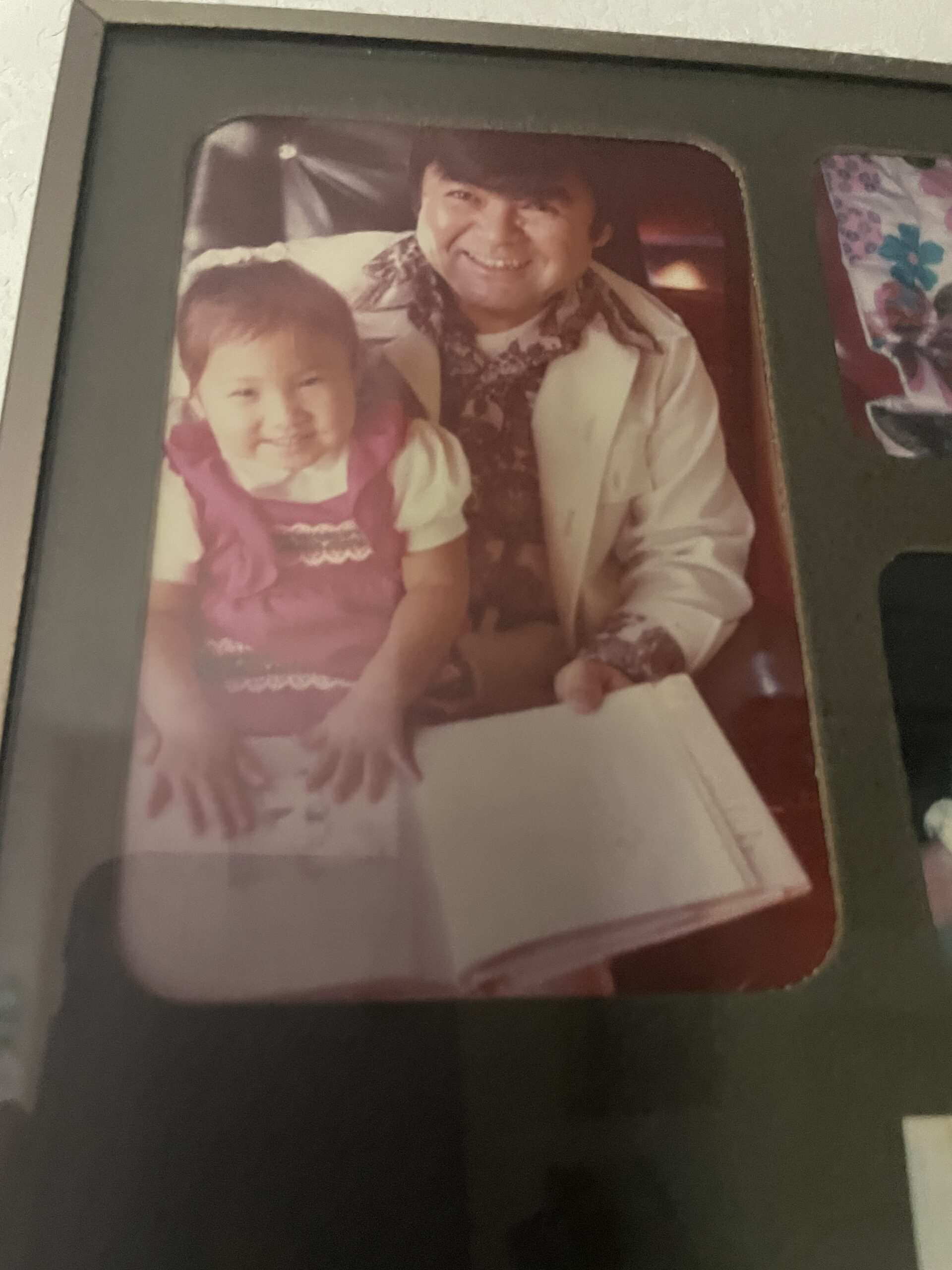
It’s been fun going through old photos as a result of the cover design process, but also because I was able to visit my mom’s house in Northern California. There I found a photo collage with this photo in it.
|
We had this collage hanging in the hallway of my childhood house so I would walk past it every day. It contains several of the photos from the same photo shoot as the cover for my book. Look at the difference between the cover photo and this photo! Several things strike me here:
|
- How fun that we’re reading a book in this photo! But imagine if the book cover had this photo instead.The mood is so different. It wouldn’t fit my book.
- The difference between a posed photo and a candid photo. Although my cover photo could also be a posed photo, it doesn’t seem that way. I guess I think about it as a matter of the gaze—in the photo on the right, we are both looking right at the camera. We both know it’s there. My cover photo seems to capture an intimate, nearly private, moment—a triangle between my dad looking at me, me looking into the distance, somehow enfolding the viewer into these gazes as the third part of the triangle.
- How much I look like my dad in the photo on the right, though I usually don’t look like him in photos. It might be that we’re holding a book together, which I love. It might be our smile, which I love even more.
I’ve got one more event for the year on December 12th at the Tacoma Historical Society, as part of the series they are hosting related to their current exhibit, City of Stories. (I’m a featured author in their exhibit!) The talk I’ve been giving lately is called “Writing Family, Writing Resistance” about my family histories in We Hereby Refuse and A Place For What We Lose. This event is free.
|
I hope that the holiday season is good to you. We are in “The Big Dark” here in the Pacific Northwest. As a California girl still, I have learned to embrace the season along with many more candles, strings of lights, warm beverages, cozy socks, thick blankets, and (of course!) piles of books. If you have a minute or two, let me know what you’re reading, and what shows you’re watching, too.
|
Here are a few more things I just finished reading, with 5 word teasers/reviews. I enjoyed reading all of them, but asterisks indicate that I particularly loved these books.
|
- Disability Intimacy, edited by Alice Wong (RIP): Prismatic Vision of Love and Disability
- Bad Bad Girl, Gish Jen: Isn’t It A Memoir?
- Sweet Heat, Bolu Babalola: British-Nigerian Romcom of Ambition
- *Shibui: The Japanese Art of Finding Beauty in Aging, Sanae Ishida: Contemplating More Than Graying Hair
- The Satisfaction Cafe, Kathy Wang: Asian America’s Ann Patchett
- *Intemperance, Sonora Jha: Loved the Voice, the Arc
- *Pitch Craft, Laura Goode: Most Writers Need This Book
Holiday Bonus: Recommended Reading List!
|
|
|
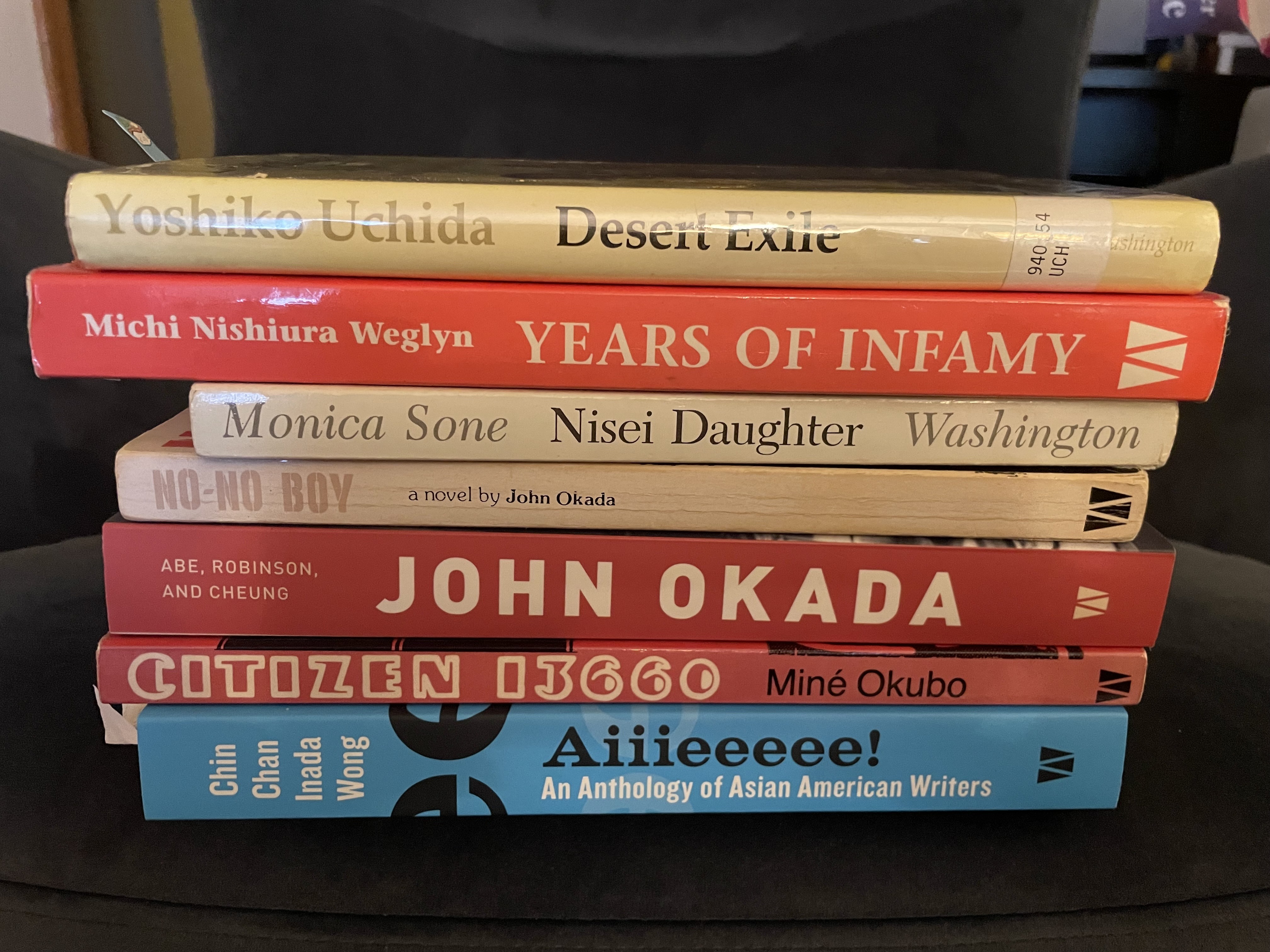
A little while ago, I posted a picture of my collected books from the University of Washington Press, which is now also my press. Every once in a while, I pinch myself, thinking that my book will get to share shelf space with these books. They are books I read when I started reading Japanese American literature, books that I read when I started diving into Asian American studies. (**All of these books below, as well as preorders of my book, are included in the site wide sale through January 2nd from the University of Washington Press. 40% off and free shipping! Enter the code WINTER25 when you check out.)
|
- Citizen 13660, Miné Okubo: The first graphic novel (memoir) about Japanese American incarceration, published in 1946. An amazing work, and the artist inserts herself into each of the drawings—sometimes the images contrast the text, which is even more interesting.
- Nisei Daughter, Monica Sone: Another memoir by a Nisei woman, this one has wonderful details of growing up in prewar Seattle. I always found this book interesting as a somewhat “lighthearted” take on the incarceration, and putting it into context with other discussions about optimism, upward mobility, and assimilation, especially in the 1950s when the book was published.
- No-No Boy, John Okada: Often called Japanese America’s “great American novel,” Okada’s book is not really about the incarceration, but about its direct aftermath, and about the poignant Seattle homecoming of draft resister Ichiro Yamada. Its publishing history is almost as intriguing as the novel itself. (See next entry for more details.)
- John Okada, edited by Frank Abe, Floyd Cheung, and Greg Robinson: For fans and scholars of Okada’s novel, this collection provides essential context for Okada’s life and work from multiple perspectives, as well as republication of much of Okada’s early and lesser-known work. I have several personal connections to this collection including my co-author Frank Abe as Okada’s biographer (and co editor of the collection), my teacher Steve Sumida with an important and superb reading of Okada’s novel, and my teacher Shawn Wong describing the novel’s publication history.
- Years of Infamy, Michi Weglyn: In his memoir Swimming in the American, my late uncle Hiroshi Kashiwagi cited this book as one that was crucial to his understanding of the larger history and context of Japanese American incarceration. This book by yet another Nisei woman includes the author’s experience as well as reproductions of archival documents as she comes to terms with the incarceration of her community. It’s an important work.
- Desert Exile, Yoshiko Uchida: The late Yoshiko Uchida is an author my dad and I were fortunate to meet when I was in fifth grade. She wrote many books for children, and I loved so many of them, including The Best Bad Thing and Japanese Folk Tales for Children, and Journey Home. Desert Exile is one of the best Nisei memoirs of the incarceration, and I hope people will give Uchida’s work more attention.
- Aiiieeeee! One of the main places where Asian American studies began, and began to recognize itself—and thus, one of the places where I began as a writer and scholar. This reissued version of the anthology has a wonderful introduction by English professor Tara Fickle. It has wonderful work by so many great Asian American authors and I have been glad to revisit it.
|
|
|
|
For an archive of my past newsletters, please visit my archive page.
|
|
|
|
|