|
|
I’m just over a month before the publication date for A Place For What We Lose, and things are about to get very, very busy with travel and events and readings and interviews. In the first part of April I will travel to two conferences with booksellers from independent bookstores, which is exciting. I have been working on several “companion essays,” or publications that will hopefully go out around publication date and drum up interest for the book. I’m being interviewed by several great people for several great publications. I’m learning Canva for social media graphics and flyers. I got a starred review from Publishers Weekly, which was a huge boost of joy: it is a national sign to booksellers and librarians that the book is notable. It is wonderful and emotionally a LOT to have this childhood dream of mine come true. I get to do this! and I’m grateful and nervous.
|
I’ve been thinking about the letter that I wrote to my book a few months ago. I got the idea for the letter from Chelene Knight, who is a Black Canadian author and writing coach. I came to know her through social media—she used to work with both of my literary agents. Her most recent book, Safekeeping, has been a great tool for my writing life toolbox, and I recommend it for writers at any stage of their book projects.
|
In addition to her own writing, Chelene’s work is coaching writers through her business Breathing Space Creative. Her coaching is not as focused on craft or completion, but more on the mental health of the writers doing that work. She has distilled a good amount of this coaching wisdom in Safekeeping. It’s a guided journal for writers to think through their book projects with intention and care, from conception all the way to publication. I appreciate this focus on the mental health of writers, and intention, probably coming from my decades-old practice of yoga.
|
Safekeeping is a workbook, with a lot of places for writers to reflect on their writing ecosystems, their values, and their book projects. I don’t know of many other books (or writing coaches) that do this kind of work. But Chelene’s prompt here really struck a chord for me:
|
|
|
Letter to Your Book Project
Any time you want to prioritize something and recognize its value, I recommend that you build an emotional narrative around it. An emotional narrative is a story you tell yourself about your non-negotiables—your boundaries or priorities—in order to make them stick….The best way I know to start building an emotional narrative is to write a letter….Imagine your book to be a good friend, a loved one, a partner. What would you want your book to know about you and your writerly dreams? How is your book a part of who you are?
|
|
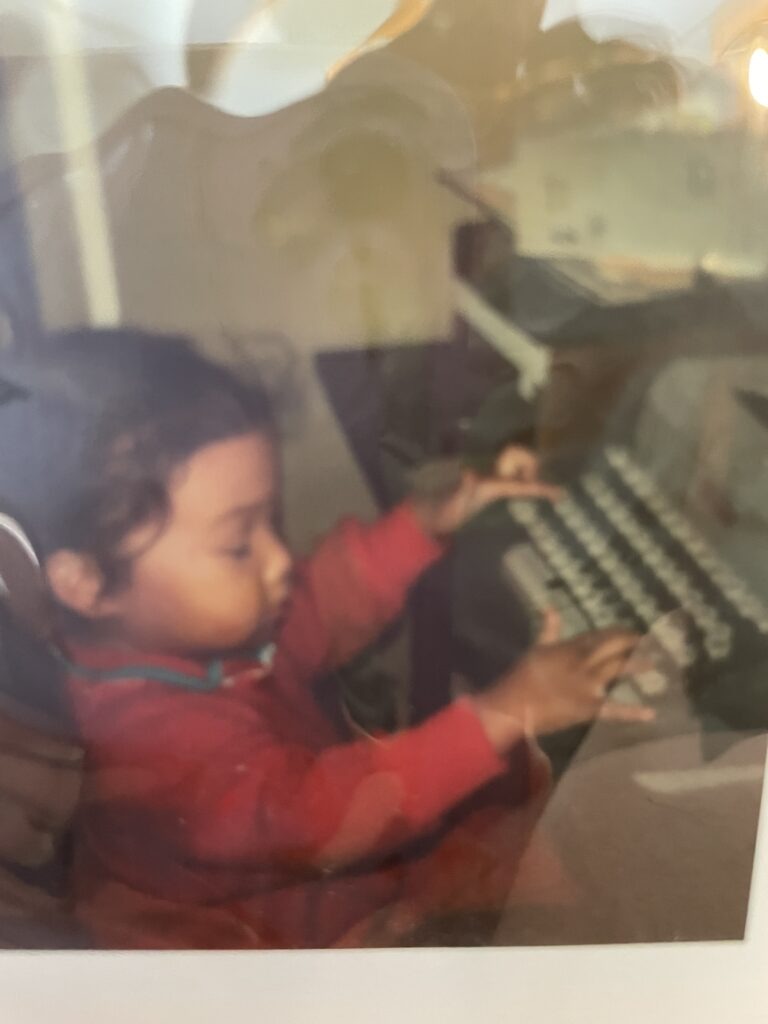
Writers spend a lot of time with our work in our heads and on pages or screens (or both). I have spent 15 years of my life—off and on—working on this book, this very personal book that details some of the dearest relationships of my life and some of the hardest times of my life. It felt important to mark this part of my book’s life, and so I wrote a letter to it.
|
Friends, it was SUCH a sentimental letter, the kind of letter you’d expect from a mom sending her youngest kid off to college. This is slightly embarrassing but like that mom, I got weepy writing it and even rereading it. When I got my first advance copy last December (called an ARC, or an uncorrected proof), I had these tender feelings about it as I pulled it out of its mailing envelope. And when my youngest kid (who is in the book, like her older sibling) picked up the book and started reading it right away, I had this strange feeling that she was holding a younger sibling in her hands. And also, that I was getting ready to let that sibling go into the world.
|
While writing the letter I thought about the writer Jamie Ford, who I heard at an event years ago. He talked about his first book, Hotel On The Corner Of Bitter and Sweet, as if it was an entity separate from but related to himself. He said something like, “it’s been great to hear dispatches from the book,” as if he was getting letters from it on the road. And it was so lovely to imagine my book in that way, realizing that it will get to be on people’s living room bookshelves, in their public libraries, in bookstores. It will travel to places I will never get to visit.
|
In my letter I thanked the book for all it had done to rewrite me, in the best ways possible. I thanked it for the spaces it had created for me, and for the connections it has and will give me. “You will make me into a published writer of my own work,” I told it, “but you will also make my dad one, too. You will get to build your own community.” I thanked it for the insights it had given me. Memoir is one of the hardest genres to write, I think, but it can be one of the most rewarding too, because it can grant the gift of deep reflection on the writer’s own life. I told it that I’d done my best (and that it had a team) to prepare it for the world, that there is an eager audience waiting for its arrival, waiting to catch it.
|
And in the end, I gently told the book that it was time to go. I asked it to send me updates about how it’s doing.
|
|
|
|
|
|
|
|
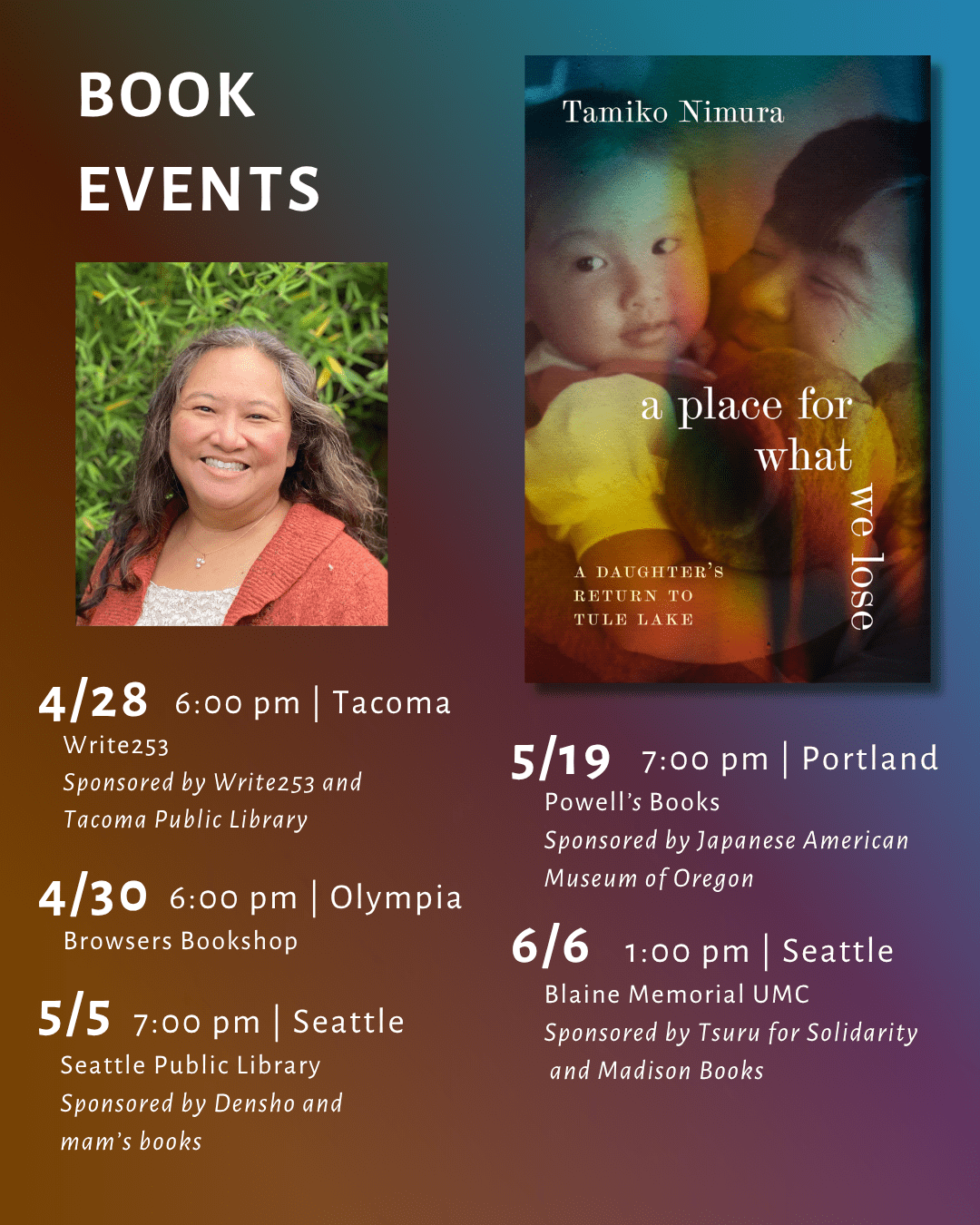
I’ll be “on the road” soon for the first leg of my book tour in the Pacific Northwest. Each one of these events is special to me, and I don’t think any two will be alike. I’m so grateful to the communities and bookstores and libraries and writers and organizations who are helping me bring the book into the world. If you live near one of these event locations, please come say hi. And please consider wearing a mask to help me protect myself and other loved ones who are immunocompromised.
|
Please check out my “news and events” page of my author website for the most up-to-date details about events in Tacoma, Seattle, Olympia, and Portland. We’re planning other events in California, and hopefully the East Coast, so stay tuned for more details about those.
|
I have been calling myself a closet introvert for a few years now, meaning that I can perform extroversion fairly well in certain settings. Teaching, public speaking, even small talk at parties. And I do like being around people, I like public speaking and I like teaching. But it is not where I gain energy, and that’s the hallmark of the introvert. I get energy from being alone, or reading, or being in quiet, or all of the above. I get energy from making things with my hands: a salad, a batch of cookies, a flock of origami cranes.
|
The trick for these next few months, I think, is that I will need to prioritize ways of renewing my energy. For many years now I have been a push-through-it-no-matter-what person, and that has not been good for my physical and mental health. To counter that, one thing I am doing is that I am declaring that intention here as a way to keep myself accountable.
|
In these times of wars and famines and book bans and eroding civil rights (and human rights), I hope that you are also finding ways to prioritize your own energy renewal, and I’d love to hear about how you are doing it, too. I’ll send you a signed bookplate or bookmark if you do.
|
|
Fighting for the Puyallup Tribe, Ramona Bennett Bill
|
|
Question 27 Question 28, Karen Tei Yamashita
|
(just got an advance copy of this one, which looks incredible and fortuitously has the same book birthday as mine—Taurus books!)
|
|
Kin, Tayari Jones (this might be my favorite of her books)
|
|
Heart the Lover, Lily King
|
Happy Land, Dolen Perkins-Valdez
|
|
For an archive of my past newsletters, please visit my archive page.
|
|
|
|
|