|
|
|
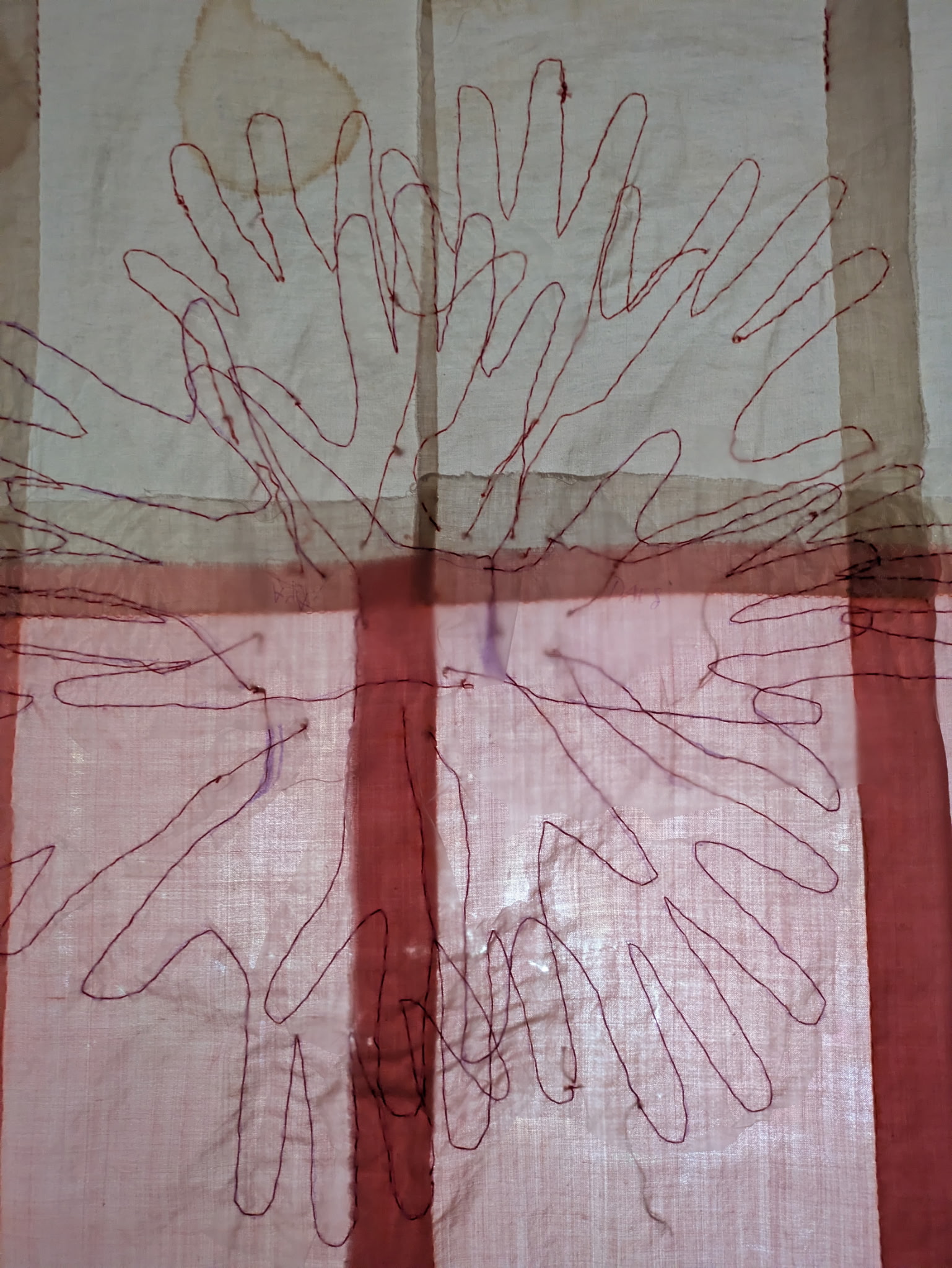
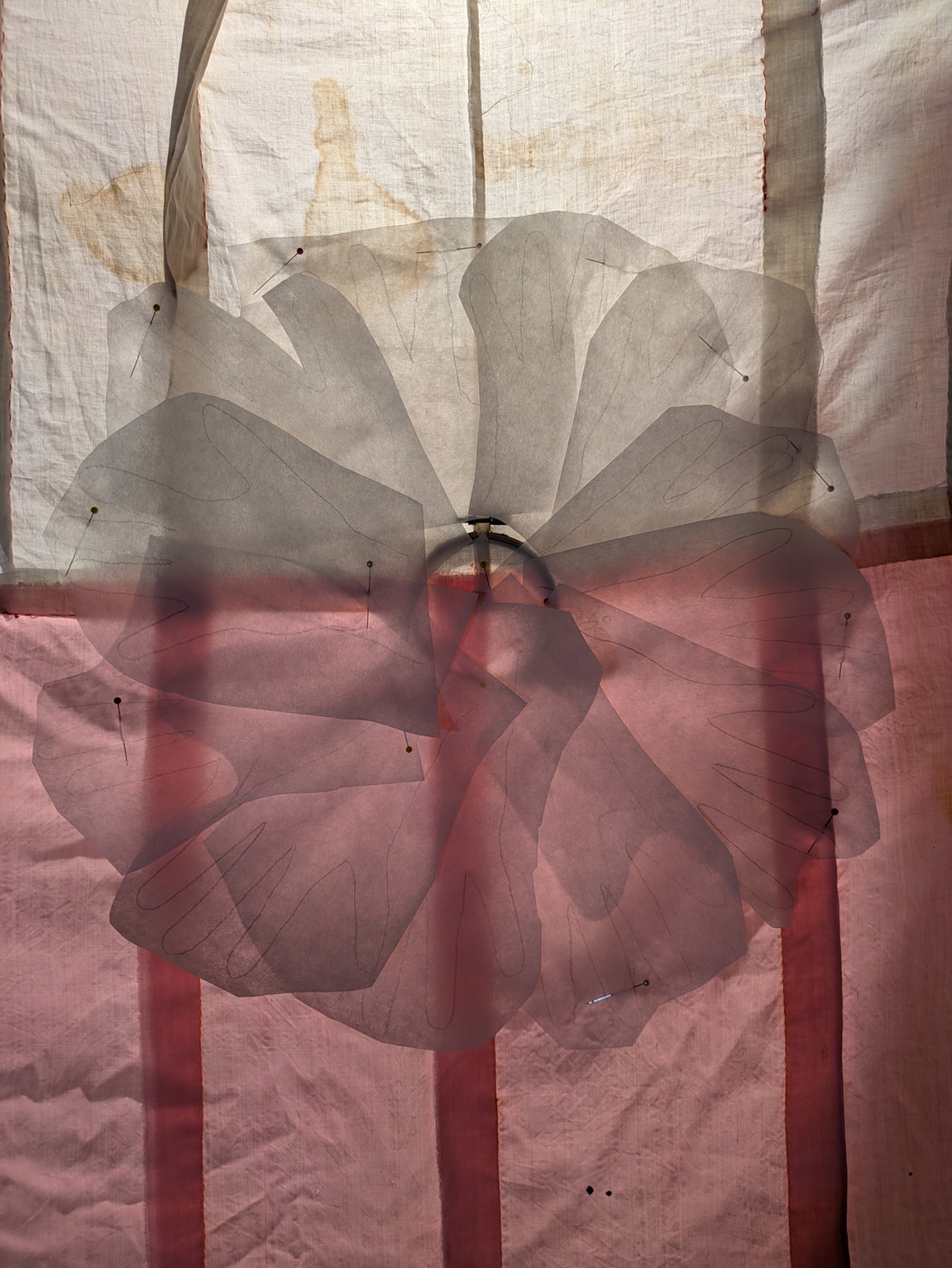
Above: An in-progress view of “A Thousand Waves Goodbye,” my sister’s companion public art remembrance project to my memoir. If you have come (or do come) to my book events, you’ll have a chance to trace your handprint and participate in the project. Follow along with her progress on @terukonimura_art on Instagram and on my author website!
|
Happy Autumn, friends (or….at least, let’s welcome Autumn, given the news lately),
|
|
“I have a family story that I’m working on. Do you have advice on getting it published?”
|
A young Asian American woman approached me at a bookstore reading in August, and asked me this question. I told her to read as widely as she could, to know what conversations she is entering—and the market for these conversations. A lot of writers have this kind of question in mind, asking and wondering eagerly about publication. For a very long time, I was this kind of writer. I get it.
|
But I have been thinking about her question ever since, because I have wanted to give her better answers, and I didn’t have the right questions or presence of mind to ask her questions in turn. For example:
|
What is your hoped-for audience for your family story? Is it just your family?(self-publishing could be the path to pursue here). Is your audience broader, and if so, can you name specific communities of readers that would be interested? Who are your ideal readers, and do you already know how your book could reach them? In my book proposal, the marketing document for the book that I sent to potential agents and publishers, I talked about the layers of my audience like an onion: at the core, there were these readers I hoped to reach. But then there were larger and broader audiences that I wanted to reach as well.
|
This is a vague publishing term that (in my mind) refers to how much of a track record a writer already has. Many writers believe that this refers to a threshold of social media followers, and while those can be helpful, platform is often much more than that. For me it means, have you already had readers and editors respond to your work (through publications, presentations, public speaking)? Have you already published any writing already? A track record of publication can show potential editors or presses that you already have an audience, that editors have already deemed your work publishable, that you know how to meet deadlines and that you can take feedback.
|
Which books do you envision your book as shelf companions in a library or a bookstore? Have you read published stories like yours already in terms of “vibe” or content?
|
What genre do you envision your family story being published as? (Is it a novel? Try The Calligrapher’s Daughter by Eugenia Kim as a good example. Is it genre-bending? Try The Woman Warrior by Maxine Hong Kingston. Would it be historically valuable? And if so, would you consider working with a university press?)
|
|
Literary agent or representation:
|
Do you envision pursuing publication with a literary agent, usually required for larger presses?
|
Do you want to publish it with a larger, a smaller or independent press? Each has their own advantages and disadvantages with design, production, marketing, publicity, and distribution. (For the record: I have loved working with my press, the University of Washington Press.)
|
How hard are you willing to work to market, publicize, and sell your book? Publishers are often looking for a willing partner who knows how to reach their intended or hoped-for audiences and communities already. Self-published books can make their writers the most money but these writers sometimes also have to work harder to have their books reach readers.
|
Who are you trying to reach, or communicate with, or connect with? Do you have an ideal reader, or readers that share certain qualities, activities, hobbies, interests? But most importantly, what do you hope will publication bring you personally and professionally?
|
As I have mentioned at many of my book events, it took me close to 15 years to write and publish A Place For What We Lose. By 15 years I don’t mean that I kept my head down and wrote nothing else for that time. There were years where I put the manuscript away, believing that I could not take it any farther. There were many times when I printed out the manuscript and declared that it was in great shape, only to find that I was terribly wrong. I have a whole bankers box full of printed out drafts that I thought were done, all the way through the copy editing and proofreading stages.
|
But those 15 years gave me a lot of time to study the publishing industry and see how I could even approach publication. I watched a lot of webinars and listened to a lot of publishing podcast episodes (I recommend The Sh*t No One Tells You About Writing). I worked with a professional developmental editor for the book proposal and sample pages. For months, I worked with a coach in training on my book proposal. I drafted my query letter many times (the letter asking literary agents to represent me and my book) before sending it out. I read a lot of newsletters (Jane Friedman’s is especially valuable). I read websites and blogs and newsletters written by literary agents and publicists (Jeffrey Yamaguchi, Cassie Mannes Murray and Kathleen Schmidt are great ones). I paid for some classes and workshops, including two weeklong VONA (Voices of Our Nation) workshops and one Yearlong in Memoir class through Hugo House. I read countless acknowledgment sections of books that I admired (and some I did not) to see who writers thanked, and how.
|
All that time, I read a lot of books from the library, studying the conversations that I knew I wanted to enter. I read a lot of magazine articles watching how other authors went through their publication process. I attended launch parties virtual and in person.
|
And of course, I wrote and wrote and wrote hundreds of thousands of words in many different genres. I had a blog for years. I wrote a process journal—a journal about the writing of A Place For What We Lose—that is nearly as long as the book itself. I wrote book reviews and event previews and community profiles. I wrote encyclopedia articles and two commissioned books of public history and two public history exhibits. I dabbled in food writing. I wrote for literary magazines and trade magazines.
|
|
Through much of this freelance career I learned to work with different editors and editing styles. Eventually, I figured out which styles seemed to work best for me, and where I felt comfortable accepting edits and where I felt comfortable pushing back on edits (with respect).
|
Those fifteen years gave me this book, but it also gave me two other important components of my career: my writing voice, and my creative communities. I was finding the voices that I wanted to use to write for a variety of contexts, and I was building a community of readers and writers who were eager to welcome the book when it finally arrived. Those are priceless parts of my journey and I am so proud and grateful for them.
|
I wish I could have told that writer and reader more of my journey, and asked her better questions to give her better advice.
|
If you have been one of my readers, or one of those newly-arrived people subscribed to this list, thank you. I’d love to say hi at some of these upcoming October events in the Bay Area/Sacramento, or in November in Portland and Vashon Island. Please register where possible via the “News and Events” page on my author website, to help our event venues and kind community hosts.
|
|
Wishing everyone care and strength in using your voices however you can (and go vote!),
|
|
Adib Khorram, Isn’t He Romantic?
|
|
Madeline Miller, Galatea (short story)
|
|
Yang Shuang-zi (translated by Lin King), Taiwan Travelogue
|
J.A. Stevens, A Change of Pace: A Reimagined Regency Romance
|
|
For my Writing Picture Books class with the incomparable Kyo Maclear, all wonderful
|
|
Julie Flett, We All Play and We All Love
|
|
Matthew Forsythe, Mina and Aggie and the Ghost
|
|
Ezra Jack Keats, The Snowy Day
|
|
Leo Lionni, Little Blue and Little Yellow (a childhood favorite!)
|
|
Grace Lin, A Big Mooncake for Little Star
|
|
Kyo Maclear: A Door is to Open and It Began With A Page
|
|
Maurice Sendak, In the Night Kitchen and Where The Wild Things Are
|
Shaun Tan: Eric, Cicada, The Arrival
|
Barbara Kingsolver, Partita
|
|
|
For an archive of my past newsletters, please visit my archive page.
|
|
|
|
|
|
|